
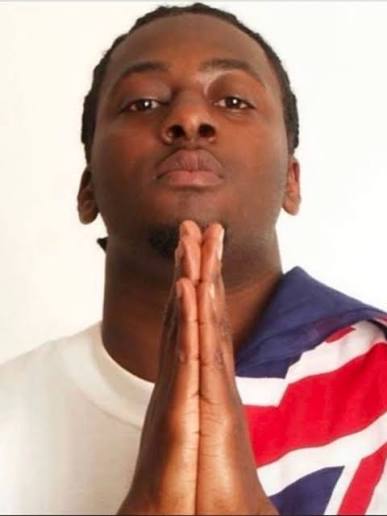
Rapper Sway DaSafo sadly passed away last week. The news arrived on 17 September 2026 with a sadness that is difficult to put into words. The North London rapper, producer, pioneer, father and independent force who helped change the perception of UK hip-hop has died at the age of 44. His passing was confirmed by the MOBO Awards and those close to him. Sway died at his home in Ghana, leaving behind four children.
For those who watched UK hip-hop develop from the margins into a global cultural force, Sway was never simply another rapper. He represented possibility. At a time when British artists were still routinely compared with their American counterparts and UK hip-hop was fighting for recognition, Sway carried himself as though there was no reason the UK couldn’t produce artists capable of standing alongside the biggest names in the world. He didn’t wait for the industry to give him permission. He built his own audience and made the industry come looking for him.
Born Derek Andrew Safo in North London to Ghanaian parents, Sway began making music as a teenager, initially developing his skills as a producer before establishing himself as an MC. His rise came at a fascinating moment in UK music, when grime was beginning to explode, underground hip-hop was developing its own identity and artists were increasingly finding ways to bypass traditional gatekeepers. Sway understood the importance of independence early. Through mixtapes, self-released music, live performances and word of mouth, he built a following without the machinery of a major record label behind him.
Then came 2005, and one of the defining moments of his career. At the MOBO Awards, Sway became the first unsigned rapper to win Best Hip-Hop Act, beating established international names including 50 Cent and The Game. It was an extraordinary achievement, but its importance went beyond the trophy itself. An independent British rapper had walked into one of the country’s biggest music ceremonies and defeated artists backed by some of the most powerful forces in the American music industry. For young British artists watching, it was evidence that the barriers weren’t quite as immovable as they had appeared.
Sway’s independent spirit was reflected in the music itself. His This Is My Demo project became one of the most important British rap releases of its period, combining technical ability with storytelling, humour, melody and a distinctly British sense of identity. “Little Derek” introduced audiences to an artist who could be playful without sacrificing lyrical substance, while the wider project established Sway as somebody who was difficult to put into a single box. It subsequently earned a Mercury Prize nomination, further establishing that UK rap could be recognised not merely as underground culture, but as serious music capable of standing alongside the country’s most respected artists.
The international recognition followed. Sway became the first British rapper to win a BET Hip Hop Award, another milestone that demonstrated how far his reputation had travelled. He attracted attention from some of the biggest figures in American music, with artists including Akon, Pharrell Williams and Lupe Fiasco recognising what he was doing. In 2008, Sway signed with Akon’s Konvict Music, taking an artist who had essentially built himself from the ground up in North London into an international music environment. It was another remarkable chapter in a career that had begun with an unsigned rapper distributing his own music.
His relationship with Lupe Fiasco became particularly significant. Sway appeared on Lupe’s 2011 album Lasers, contributing to “Break the Chain”. The album went to No. 1 on the US Billboard 200, placing Sway’s voice alongside one of the most respected American rappers of his generation. For an artist who had spent years proving that UK hip-hop could stand on its own, it was another reminder that his reach extended far beyond the UK.
But Sway’s contribution to UK music cannot be measured simply through international co-signs, awards or chart positions. His career was also about connection. He collaborated with and crossed paths with a remarkably broad range of British talent, including Kano, Tinchy Stryder, Akala, Donae’o, Riz Ahmed and Ed Sheeran. He could move between hip-hop, grime, pop and bass music while retaining a strong sense of who he was. His single “Level Up” reached No. 8 on the UK Singles Chart in 2012, giving him one of the biggest commercial moments of his career, but by then his influence was already considerably larger than the numbers could suggest.
Perhaps the most important chapter of Sway’s legacy came through what he did for other people. Through Dcypha Productions, he became increasingly involved in developing younger artists and creatives, helping nurture talent including Tiggs Da Author and working with KSI during the early stages of KSI’s musical career. This side of his career deserves particular recognition because it demonstrated something fundamental about Sway: he understood that success meant more when it could be passed on. Having fought his way through doors that were not necessarily open to him, he wanted to make those doors easier for the people coming afterwards.
His Ghanaian heritage was another important part of his identity. Sway represented a generation of British artists whose identities could no longer be neatly separated into British or African. His connection to Ghana informed aspects of his music and his life, and his career ultimately took him back there. He embodied the reality of modern British culture — London-born and British, but equally connected to the heritage and experiences of the wider African diaspora. That duality was never something he needed to apologise for or explain away; it was simply part of who he was.
Looking back now, it is impossible to separate Sway’s career from the transformation of UK hip-hop itself. Today, British rappers regularly headline festivals, dominate streaming platforms, collaborate with global superstars and influence music far beyond these shores. The infrastructure exists in a way it didn’t when Sway was starting out. There is a global appetite for British voices that previous generations had to fight to create. Sway was not solely responsible for that transformation — UK hip-hop has always been built by countless artists, DJs, producers, promoters and fans — but he was undeniably one of the artists who helped prove that the door could be opened.
What makes his passing particularly painful is that Sway’s story was never only about what he achieved himself. It was about what his achievements told everyone else was possible. An unsigned rapper could win a major award. A British MC could beat American stars. An independent project could earn a Mercury Prize nomination. A rapper from North London could attract the attention of Akon, Pharrell and Lupe Fiasco. A British artist could cross the Atlantic without abandoning his identity. And, perhaps most importantly, an artist could achieve success and then turn around and help somebody else find theirs.
There will be statistics used to remember Sway. The MOBO. The BET Hip Hop Award. The Mercury Prize nomination. The chart positions. The collaborations. The international deal. All of them matter, because they tell part of the story. But statistics can only tell us what somebody achieved. They cannot tell us what somebody meant.
For that, you have to look at the people who came after him.
You have to look at the British rappers who grew up knowing that an artist from North London had already stood on an international stage and demanded to be taken seriously. You have to look at the younger musicians he encouraged, the creatives he supported and the audiences who saw something familiar in him. You have to look at a UK hip-hop scene that is now so successful internationally that it can sometimes be easy to forget how hard previous generations had to fight for that recognition.
Sway was part of that fight.
He was one of the artists who refused to accept that British hip-hop had to sit at the back of the room. He brought his own chair, sat down and made everybody pay attention. And once he had made that space for himself, he helped create room for others. Having briefly met Sway in 2017 in South of France it was clear from his words the passion he had for UK hip hop and his humbleness when speaking with him.
Sway DaSafo was more than an award-winning rapper. He was an independent artist before independence became a fashionable industry slogan. He was a British artist with international ambition before the world routinely looked to Britain for its next musical movement. He was a Ghanaian-British voice who never had to choose between the different parts of his identity. And he was a mentor and advocate who understood that the real measure of a career is not simply how high you climb, but how many people you help climb after you.
His death leaves an enormous gap. But his work remains — in the records, in the memories, in the artists he influenced and in UK hip-hop culture he helped shape.
And for that, UK hip-hop will remember him.
Rest in peace, Sway DaSafo. 1982–2026.


