From Toronto to New York, the celebrations mark more than a milestone birthday for the Canadian Native. They offer a moment to reflect on the career of a man who helped redefine hip-hop, reshape popular music and become one of the most influential cultural figures of his generation.
Drake has turned 40, and he is celebrating in a manner befitting a man whose career has been defined by spectacle, ambition and an extraordinary ability to command attention.
Born on 24 October 1986, Drake arrives at 40 with a legacy that stretches far beyond chart records and platinum albums. For nearly two decades, he has helped shape the sound of hip-hop to the masses, blurred the boundaries between hip-hop and R&B, brought international musical influences to wider audiences and transformed the way artists navigate fame in the digital age.
Yet Drake’s story has never been simply about success. It has been a journey marked by reinvention, rivalry, vulnerability and an ongoing negotiation with the culture that made him.
As the celebrations unfold, his milestone birthday provides an opportunity to revisit the pivotal moments that turned a former television actor into a global cultural force.
The beginning: From Degrassi to hip-hop’s next star
Long before sold-out arenas and record-breaking streaming numbers, Drake was known to audiences as Jimmy Brooks on the Canadian teen drama Degrassi: The Next Generation.
His transition from acting to music was far from conventional. He did not follow the familiar trajectory of many rap stars who emerged through underground scenes or established regional movements. Instead, Drake arrived with a different set of tools: a background in performance, a willingness to sing as well as rap, and an instinct for translating personal experiences into music that connected with a broad audience.
That approach became clear with his 2009 mixtape So Far Gone.
Tracks such as “Best I Ever Had” and “Successful” introduced an artist who could balance ambition with insecurity, confidence with romantic disappointment. He was willing to discuss emotions that many mainstream rap stars had traditionally kept at a distance.
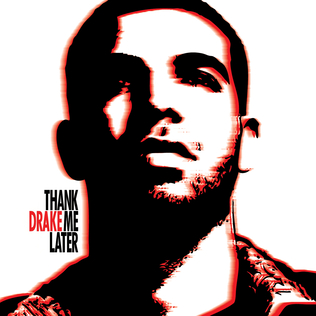
The project attracted major attention and helped secure his association with Lil Wayne’s Young Money Entertainment. In 2010, Drake released his debut studio album, Thank Me Later, which debuted at No. 1 on the Billboard 200.
The foundation had been laid. Drake was no longer an actor attempting to become a rapper. He was a genuine contender for the top of the music industry.
2011: Take Care changes the conversation
If So Far Gone introduced Drake’s sound, Take Care established its lasting influence.
Released in 2011, the album blended atmospheric production, introspective songwriting and melodic rap into a cohesive world of late-night reflection, complicated relationships and the emotional cost of success.
“Marvins Room” became an anthem of romantic regret, while “Headlines” captured the pressures of rising fame. The title track, featuring Rihanna, demonstrated his ability to create emotionally charged music with enormous mainstream appeal.
Crucially, Drake helped make vulnerability a commercial strength in contemporary hip-hop. He was not the first rapper to explore heartbreak or combine singing with rapping, but he brought those elements into the centre of the mainstream conversation.
Take Care won the Grammy Award for Best Rap Album in 2013, cementing its place as a defining release of his early career.
Its influence extended beyond Drake himself. The melodic, emotionally open approach he helped popularise became a significant part of the sound of the decade that followed.
2015: The year Drake mastered the cultural moment
By 2015, Drake had developed an ability to turn individual songs into major cultural events.
If You’re Reading This It’s Too Late showed that he could operate with a harder, more confrontational sound without losing his commercial appeal. Then came “Hotline Bling”, a record whose success extended well beyond music into internet culture, fashion and memes.
But another moment proved equally important: “Back to Back”.
Released during his highly publicised feud with Meek Mill, the track demonstrated Drake’s ability to combine musical competition with the speed and visibility of social media. The diss record became an event in its own right, generating conversations that continued long after listeners had heard the song.
It earned a Grammy nomination for Best Rap Performance, further illustrating how the boundaries between hip-hop’s competitive traditions and mainstream entertainment were changing.
Drake understood that in the digital era, a song could be more than a song. It could become a headline, a punchline, a cultural reference and a declaration of dominance.
2016: Views puts Toronto on the global map
In 2016, Drake reached another defining point with the release of Views.
The album was a commercial phenomenon, but its significance went beyond sales. It reinforced his identity as a Toronto artist while demonstrating his growing ability to connect audiences across international musical traditions.
“One Dance”, featuring Wizkid and Kyla, became a global hit and spent 15 consecutive weeks at No. 1 on the UK Official Singles Chart.
Its success reflected the growing international reach of Afrobeats and dancehall influences, helping bring those sounds to an even wider mainstream audience. Drake’s willingness to work across genres had become one of his defining strengths.
At the same time, Toronto was increasingly central to his public image. The city became part of his music, his visual identity and his wider OVO brand.
Drake helped demonstrate that an artist did not have to emerge from the traditional centres of American hip-hop to become a defining force in the genre. Toronto could be both his home and an essential part of a global cultural identity.
2018: Scorpion and the streaming era
By the time Scorpion arrived in 2018, Drake had become one of the defining artists of the streaming age.
The double album produced enormous commercial results, led by songs including “God’s Plan”, “In My Feelings” and “Nice for What”.
“God’s Plan” became particularly significant. Its video, in which Drake gave away money and supported members of the public in Miami, turned the release into a wider cultural moment. The song subsequently won the Grammy Award for Best Rap Song in 2019.
The success of Scorpion also illustrated a new reality in the music business: artists could dominate not just through individual singles but through sustained streaming across entire projects.
Drake had become exceptionally adept at maintaining visibility, feeding the charts and keeping his music embedded in everyday life. His songs moved between clubs, radio, social media and private listening with remarkable ease.
His influence increasingly extended beyond the recording studio, encompassing fashion, business, collaborations and the wider infrastructure of celebrity.
2021: A record-breaking superstar
Drake’s commercial achievements continued to accumulate with Certified Lover Boy, released in 2021.
The album debuted at No. 1 on the Billboard 200, while all 21 tracks entered the Billboard Hot 100. It was a striking demonstration of his ability to command attention across an entire release in a music industry increasingly shaped by streaming.
By this point, Drake’s chart performance had become a story in itself. His longevity across changing musical trends, platforms and audience habits distinguished him from many artists whose commercial peaks were concentrated in a single era.
Yet the numbers also raised a larger question about his place in music: how should a career be measured when commercial dominance, artistic experimentation and cultural influence do not always move in the same direction?
For Drake, the answer has never been straightforward. His career has been defined by the tension between making music for mass audiences and maintaining credibility within a competitive hip-hop culture.
2024: THE KENDRICK LAMAR FEUD AND THE BATTLE THAT SHOOK HIP-HOP
Drake’s career has never been short of competition, and his diss tracks have played a significant role in shaping his reputation as one of hip-hop’s most formidable commercial forces. From his 2015 clash with Meek Mill, which produced the Grammy-nominated “Back to Back”, to his 2018 confrontation with Pusha T, Drake has repeatedly demonstrated a willingness to take his rivalries into the booth. But while “Back to Back” became a defining victory in his career, “The Story of Adidon” exposed the risks of engaging in battles where personal revelations could overshadow the music itself.
Then came 2024, when his feud with Kendrick Lamar escalated into one of hip-hop’s most closely watched rap battles. Drake fired back with tracks including “Push Ups” and “Family Matters”, while Lamar responded with a series of increasingly personal records, culminating in the cultural phenomenon that was “Not Like Us”.
The battle extended far beyond music, dominating social media and reigniting debates about authenticity, lyrical credibility and Drake’s standing within hip-hop. While his commercial success remained extraordinary, the confrontation demonstrated that chart dominance does not automatically translate into cultural consensus.
For Drake, the feud became a defining chapter in a career built on competition, ambition and the ability to command attention. From “Back to Back” to “Family Matters”, his diss tracks have shown his instinct for turning conflict into spectacle. But the Kendrick Lamar battle raised the stakes, placing his reputation under a spotlight unlike anything he had experienced before.
At 40, Drake’s legacy is inseparable from these rivalries. They reveal an artist who has consistently embraced hip-hop’s competitive spirit while demonstrating that, in a culture where reputation matters as much as commercial success, even the biggest superstar is never beyond challenge.
2026 — THREE ALBUMS DROPPED IN ONE DAY, THREE DISTINCT IDENTITIES
In a bold move that demonstrated the scale of his ambition, Drake released three albums simultaneously in 2026: Iceman, Habibti and Maid of Honour. Although hip-hop has a history of artists flooding the market with multiple projects previously seen by the likes of Gucci Mane and Soulja Boy, Drake’s decision to deliver three full-length albums at once represented a bold statement from an artist operating at the highest level of global superstardom. Each project carved out its own musical identity, allowing Drake to explore different sounds while challenging the conventional album-release strategy. It was a calculated show of confidence: a belief that his audience was large enough, and his cultural influence powerful enough, to sustain three distinct releases at the same time.
40 years old, and still part of the conversation
Drake’s 40th birthday arrives after a career that has repeatedly reshaped expectations of what a hip-hop superstar can be.
He has helped bring emotional vulnerability into the mainstream, made genre-blending a defining feature of contemporary rap, elevated Toronto’s place in global music and demonstrated how an artist can build an interconnected world of music, business, fashion and internet culture.
His influence is evident not only in his records but in the musical landscape that has developed around him.
The celebrations in Toronto and New York mark a milestone for a man who has spent much of his adult life navigating the space between local identity and global superstardom.
Toronto represents the place that shaped him and the identity he has consistently carried into his music. New York reflects the wider entertainment world in which he has become a permanent presence.
Together, the two cities provide a fitting backdrop for a career built on crossing boundaries.
At 40, Drake is no longer the young actor hoping to prove himself in hip-hop. He is an artist whose influence has helped shape the sound, business and public image of an entire era.
His story is still being written, and his place in hip-hop history will continue to be debated. But the significance of his journey is already clear: Drake did not simply learn to play the game.
He helped change the rules — and changed what a generation came to expect from global hip-hop icon.


