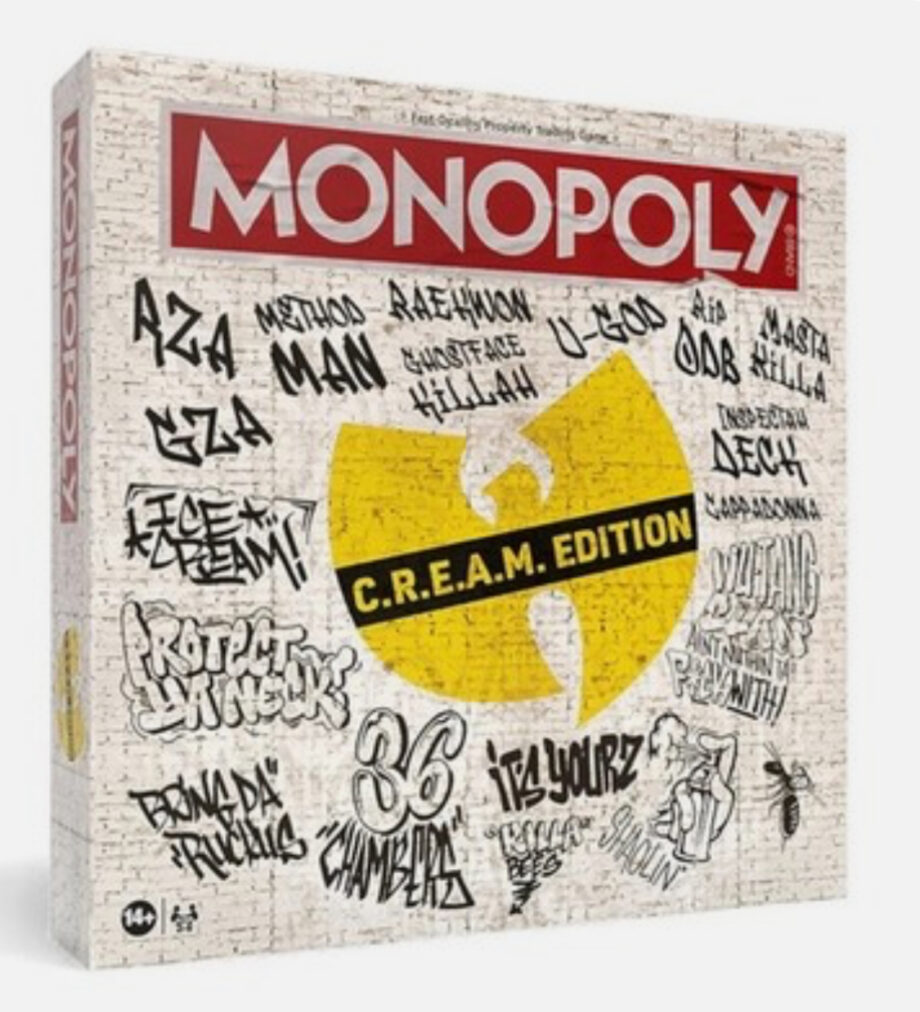
Picture this: the Wu-Tang Clan spread across a studio table like they’re about to blueprint a classic album—but instead they’re cooking up a Wu-Tang Monopoly board. Shaolin blocks replace the fancy neighborhoods, dollar stacks flip into C.R.E.A.M. currency, and the “Go to Jail” card becomes “Go to Rikers—Do Not Pass Go.” Every token is iconic: a mic wrapped in tape, a killer bee, a wallaby boot, maybe even a mini golden razor for the real heads. RZA’s orchestrating the whole thing like a chess grandmaster, breaking down property tiers the same way he once broke down samples. Meth is clowning, Ghost is arguing about aesthetics, Raekwon is naming every square like it’s a new dish on the Purple Tape menu. It’s hip-hop world-building—Wu style.
Is the Wu-Tang brand the most versatile?
In hip-hop culture, you could argue nobody flips their brand across more lanes than Wu-Tang. They went from gritty Staten Island storytelling to clothing lines, martial-arts aesthetics, video games, comic books, high fashion collabs, a literal secret album guarded like a crown jewel, museums, ice cream shops, and yes—even a Monopoly board. They didn’t just build a brand; they built a universe. Other crews have range, sure—but Wu-Tang’s versatility hits different because it’s all rooted in a mythology they created from scratch. Their style, their slang, their symbols—instantly recognizable, endlessly remixable.


