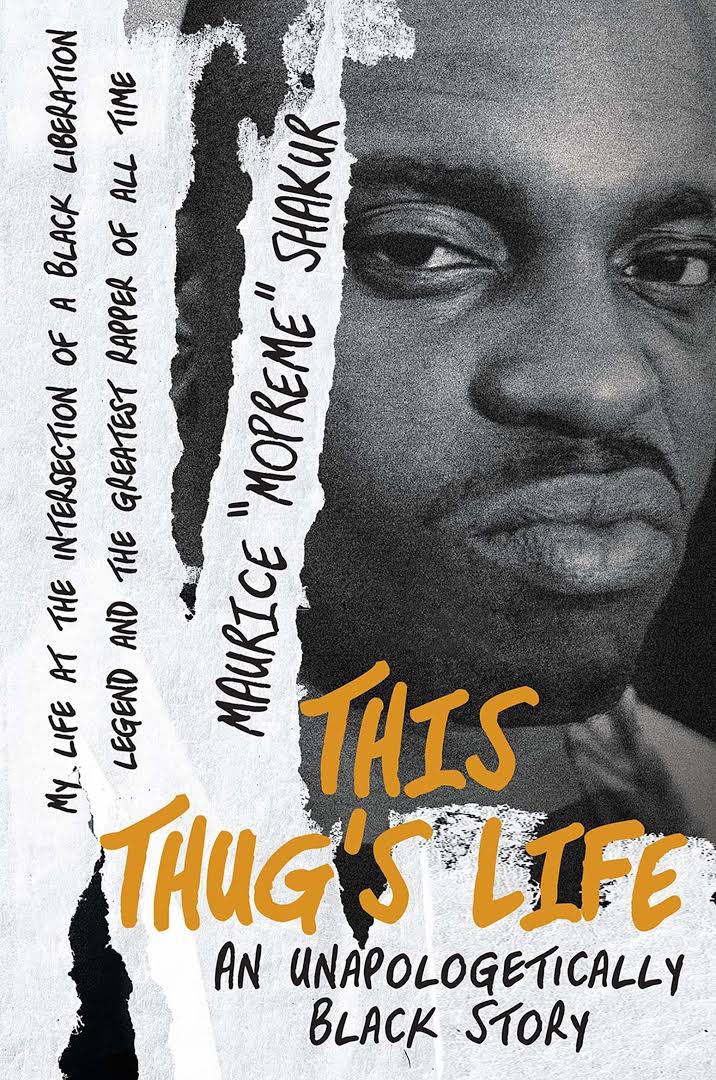
Mopreme Shakur’s upcoming memoir is significant not just because of who he is related to, but because of the position he occupied inside hip-hop at a moment when the culture was changing forever. As Tupac Shakur’s older stepbrother, collaborator, and creative partner, Mopreme wasn’t watching history from the sidelines — he was helping write it.
In This Thug’s Life, Mopreme steps forward as more than a footnote in Tupac’s story. The book reframes the rise of Thug Life and the broader West Coast movement through the eyes of someone who helped shape its sound, philosophy, and message from the inside. Mopreme and Tupac weren’t just family; they were ideological partners, bonded by shared experiences, political awareness, and a belief that hip-hop could be both raw street expression and revolutionary commentary.
Their collaboration in Thug Life was especially influential. At a time when the term “thug” was being used to criminalize young Black men, Mopreme and Tupac reclaimed it, redefining it as a symbol of survival, resistance, and self-determination. Songs like Pour Out a Little Liquor and How Long Will They Mourn Me? weren’t just records — they were eulogies, protest statements, and community reflections. Mopreme’s presence helped ground that movement, adding maturity, lived experience, and a sense of responsibility to the music’s message.
The book explores how their family’s background in Black liberation politics shaped this worldview. Mopreme makes it clear that Thug Life was never meant to glorify violence for shock value — it was a response to systemic neglect, policing, poverty, and generational trauma. That framing is crucial, especially today, as hip-hop continues to wrestle with how its most powerful imagery is understood and consumed.
What makes This Thug’s Life stand out is its insider honesty. Mopreme writes about the creative process, the brotherhood, the tensions, and the moments of joy that existed before fame distorted everything. He also confronts the cost of that fame — the losses, the misinterpretations, and the ways Tupac’s message was sometimes overshadowed by controversy. Through Mopreme’s lens, readers see Tupac not as a myth, but as a young artist constantly evolving, questioning, and pushing boundaries.
In terms of hip-hop culture, the book serves as a missing link. Mopreme’s story connects the political roots of rap, the street realism of the 1990s, and the global legacy Tupac left behind. It reminds readers that hip-hop’s most influential moments often came from collectives and conversations, not just solo stars.
Ultimately, This Thug’s Life isn’t just a memoir — it’s a cultural correction. By telling his own story and reclaiming his role, Mopreme Shakur adds depth to the history of hip-hop and restores balance to a narrative that has too often focused on spectacle over substance. It’s a vital contribution to understanding not only Tupac Shakur, but the era — and the movement — they helped define.
Mopremes book “This Thug’s Life” is expected to be released February 24th.


