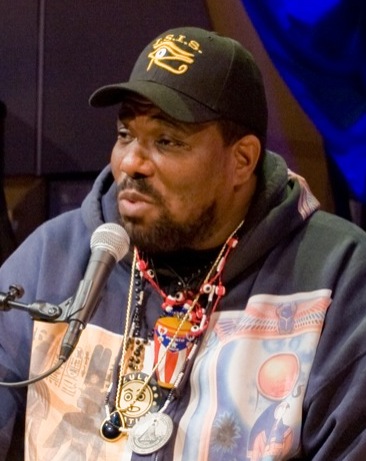
Afrika Bambaataa one of the founding fathers of Hip Hop has passed away from Cancer. He stands as one of the most influential and complex figures in the origins of hip-hop culture. Emerging from the Bronx in the 1970s—a time and place marked by economic hardship, gang activity, and urban decay—he helped transform a generation’s frustration into creativity, unity, and expression. While many know hip-hop through its commercial success today, its roots are grounded in community-building efforts led by pioneers like Bambaataa.
Born Kevin Donovan, he was initially involved in the gang scene, becoming a warlord in the Black Spades, one of New York City’s most notorious street gangs. But rather than continuing down a path of violence, Bambaataa experienced a shift in perspective after winning a trip to Africa. That journey, along with the broader influence of global cultures and political movements, reshaped his vision. He began to see the potential for music and culture to replace conflict with connection.
This vision led to the creation of the Universal Zulu Nation, a collective dedicated to promoting peace, unity, love, and having fun—the foundational principles of hip-hop. Through this organization, Bambaataa brought together DJs, dancers, graffiti artists, and MCs, helping define hip-hop not just as a sound, but as a culture with multiple elements.
Musically, Bambaataa was groundbreaking. His 1982 track “Planet Rock” fused hip-hop rhythms with electronic music, drawing heavily from Kraftwerk. The result was something entirely new: electro-funk, a futuristic sound that expanded hip-hop beyond its funk and soul roots. It introduced drum machines and synthesizers in a way that would influence not just hip-hop, but electronic dance music for decades.
What set Bambaataa apart from his contemporaries was his openness to innovation. While DJs like DJ Kool Herc emphasized breakbeats and Grandmaster Flash perfected turntablism, Bambaataa looked outward, blending genres and cultures. He treated hip-hop as a global language rather than a local phenomenon, helping it spread far beyond the Bronx.
Afrika Bambaataa passed away after a life that left an undeniable mark on music and culture. His death prompted reflection across the hip-hop community, as artists, historians, and fans revisited both his groundbreaking contributions and the controversies that later surrounded him. Allegations against Bambaataa in his later years cast a shadow over his legacy, raising difficult questions about accountability and how history remembers influential figures.
Still, there is no denying the foundational role Afrika Bambaataa played in shaping hip-hop as both a musical genre and a cultural movement. He helped redirect energy from violence into art, created structures for community through the Zulu Nation, and pushed the boundaries of what hip-hop could sound like. His story is intertwined with the birth of a culture that has grown into a global force—one that continues to evolve, challenge, and inspire.
To understand hip-hop’s beginnings without Afrika Bambaataa would be to miss a crucial piece of the puzzle: the idea that music can be more than entertainment—it can be transformation.
The announcement of his passing this week marks the end of a deeply influential and complicated chapter in hip-hop history.