
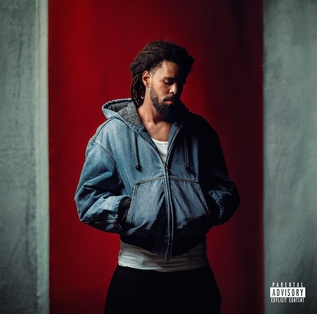
For nearly a decade, The Fall-Off lived more as a promise than a project — a looming final chapter teased in verses, interviews, and tour visuals. When J. Cole finally released the album, it arrived not as a victory lap or a hit-chasing spectacle, but as something far more deliberate: a measured, introspective reflection on legacy, aging, and purpose.
Framed as potentially his last studio album, The Fall-Off feels less like a mic drop and more like a deep exhale.
An Album About Time — and What It Takes Away
Structured as a 24-track double album, The Fall-Off splits its focus between past and present. The first half carries the hunger and grit that defined Cole’s rise, while the latter leans into adulthood, responsibility, and emotional clarity. The contrast isn’t flashy — it’s subtle, intentional, and deeply personal.
Cole sounds at peace here. He’s no longer chasing relevance or trying to out-rap his peers for sport. Instead, he’s reflecting on the cost of success, the erosion of ego, and what remains when the noise dies down. Production stays understated: soulful loops, muted drums, space for his words to breathe. It’s an album designed for listening, not skimming.
Standout Tracks
While The Fall-Off works best as a full body of work, several tracks rise as emotional and lyrical anchors:
- “Poor Thang” – A sharp, confident opener that reminds listeners Cole’s pen is still elite, even when the tone is restrained.
- “SAFETY” – Nostalgic and grounded, rooted in Carolina imagery and personal growth. One of the album’s warmest moments.
- “Drum n Bass” – Minimalist and patient, rewarding repeat listens with dense storytelling and introspection.
- “The Fall-Off Is Inevitable” – The thematic heart of the album, confronting decline, mortality, and acceptance with striking honesty.
- “39 Intro” – Cole at his most reflective, surveying his journey with clarity rather than regret.
- “I Love Her Again” – A standout narrative track that blends homage, self-examination, and hip-hop history.
- “Only You” (feat. Burna Boy) – Soulful and tender, expanding the album’s emotional range without disrupting its intimacy.
- “What If” (feat. Morray) – Thought-provoking and mature, imagining reconciliation instead of conflict in hip-hop culture.
These tracks don’t scream for attention — they linger.
How It Stacks Up Against His Catalog
Compared to 2014 Forest Hills Drive, The Fall-Off lacks the same cultural immediacy and radio-ready anthems. There’s no “No Role Modelz” moment here — and that feels intentional. Where FHD was about arrival, The Fall-Off is about reflection.
Against The Off-Season, Cole sounds less competitive but more emotionally open. The technical sharpness is still there, but it’s no longer the point. And unlike 4 Your Eyez Only, which focused inward on a single narrative, The Fall-Off zooms out — examining an entire career, and the man behind it.
If there’s a flaw, it’s the album’s length. At times, the sprawl dilutes the impact, and not every track carries equal weight. But even its weaker moments feel purposeful rather than careless.
Final Take
The Fall-Off isn’t built to dominate playlists or chase a moment. It’s a legacy album — thoughtful, patient, and quietly confident. Whether or not J. Cole truly walks away after this, the project feels like closure: an artist choosing honesty over hype, reflection over relevance.
It may never be his most beloved album, but it might be his most revealing. And if this really is the end, Cole leaves hip-hop not with a shout — but with something far more lasting: clarity.


