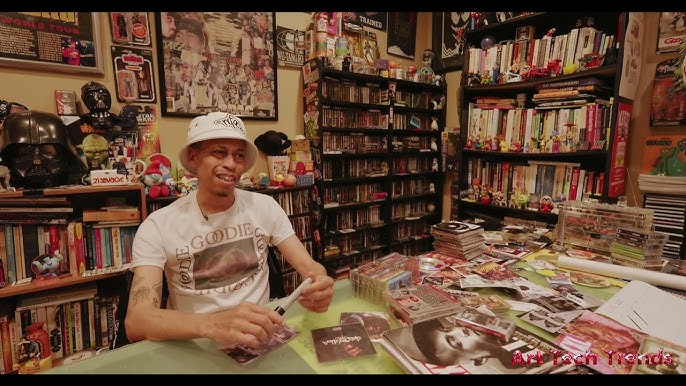
Nuface occupies a unique and often under-acknowledged space in the cultural landscape of Atlanta hip-hop. Not primarily known as a charting artist or industry executive, Nuface’s influence comes from something equally powerful: preservation, interpretation, and cultural memory. In a city where rap evolves quickly and reinvents itself every decade, he has served as one of the key voices documenting where the sound came from — and why it matters.
Atlanta’s hip-hop identity didn’t emerge fully formed. It was built layer by layer, from the Afrocentric consciousness of the early 1990s to the global dominance of trap in the 2000s and beyond. Nuface’s work has centered on tracing those transitions, mapping connections between generations of artists, neighborhoods, studios, and movements that might otherwise be remembered only in fragments.
He is especially known for contextualizing the rise of foundational acts like OutKast and Goodie Mob, not simply as successful performers but as cultural architects. Through interviews, talks, and archival storytelling, he frames their emergence as part of a broader Southern artistic awakening — one that challenged coastal dominance and redefined what hip-hop could sound like, look like, and represent.
In Nuface’s interpretation, collectives such as the Dungeon Family weren’t just musical collaborators — they were community builders who helped turn Atlanta into a creative ecosystem. His work often emphasizes how informal spaces — basements, neighborhood studios, open-mic nights, local radio — functioned as incubators long before major labels took notice.
What makes his contribution particularly important is his attention to continuity. While popular narratives often jump from one superstar era to another, Nuface focuses on the connective tissue between them. He draws lines from the alternative Southern expression of the 1990s to the street-driven intensity that later defined artists like T.I. and Jeezy, framing trap not as a sudden invention but as the culmination of social conditions, regional pride, and sonic experimentation decades in the making.
Beyond artist histories, Nuface has also helped shape how Atlanta understands its own cultural geography. He treats the city not as a single unified scene but as a network of neighborhoods, each contributing distinct sounds, slang, and aesthetics. By documenting these localized influences, he preserves the sense that Atlanta hip-hop is rooted in lived environments — housing projects, strip-mall studios, community centers — rather than abstract industry narratives.
His influence extends into education and cultural discourse. Younger artists, journalists, and fans often draw from his work when trying to understand the lineage they inherit. In a genre where innovation is prized and attention moves quickly, his role has been to slow the conversation down — to remind people that every new wave rests on older foundations.
Perhaps most importantly, Nuface represents a model of cultural stewardship within hip-hop itself. Rather than waiting for academic institutions or outside historians to define Atlanta’s musical legacy, he embodies the idea that communities can document their own stories from the inside. His work reinforces that hip-hop history is not just something to be studied after the fact — it is something actively shaped by those who witness, record, and interpret it in real time.
In a city that helped move Southern rap from regional curiosity to global force, that role carries real weight. By preserving memory, building context, and connecting generations, Nuface has helped ensure that Atlanta’s hip-hop story is not just heard — but understood.


