
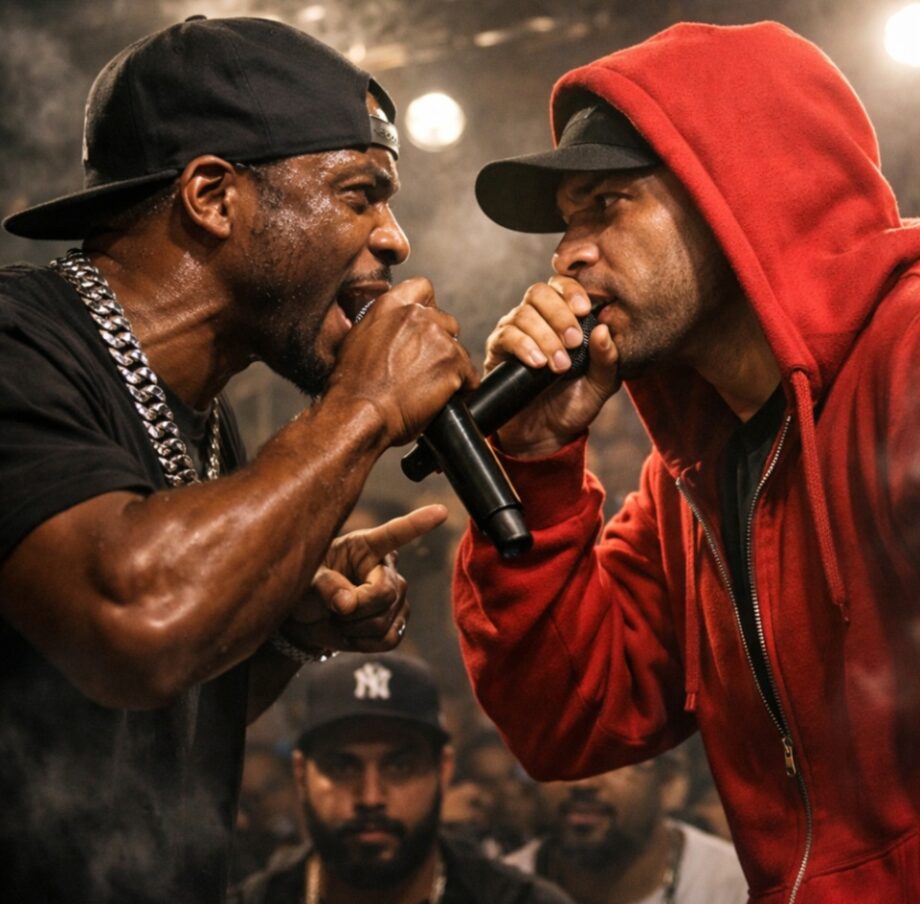
Jay-Z has never been just a rapper—he’s a voice of authority in hip-hop. So when he recently questioned whether battling is still necessary in today’s culture, people paid attention. In a 2026 interview, he reflected on modern rap feuds and suggested he’s no longer convinced battling “needs to be a part of the culture,” pointing to how quickly competition now spirals into personal attacks, amplified by social media.
His concern isn’t about lyricism—it’s about what comes after. The Kendrick Lamar vs. Drake saga, for instance, showed how fast sharp bars can turn into full-blown character breakdowns, with fans escalating tensions and blurring the line between music and real life.
But while Jay-Z is focused on the fallout, others are defending the foundation.
Battle rap icon Loaded Lux was quick to respond. For him, battling isn’t the problem—it’s the essence. It’s tradition. It’s the proving ground. Pushing back on Jay’s stance, Lux made it clear: you can’t separate hip-hop from competition. Battling, in his view, is embedded in the culture’s DNA—a space where MCs refine their craft and measure greatness in real time.
And that’s where the real tension lies.
Because the truth is—rap battles never disappeared.
From URL stages to viral diss tracks, from small-room clashes to headline-grabbing beefs, battling continues to drive lyricism in a way few formats can. It demands sharp writing, quick thinking, and fearless delivery. In an era where streaming often outweighs skill, battle culture remains one of the last arenas where bars still matter most.
Jay-Z himself came up through that fire. His legendary clashes with Nas didn’t just define careers—they elevated the art form. What’s changed isn’t the act of battling, but the environment surrounding it. Social media has turned moments into movements, stretching lyrical competition into nonstop spectacle.
Still, the core hasn’t disappeared.
If anything, voices like Loaded Lux remind us why battling endures. In those spaces, the focus remains on wordplay, performance, and layered meaning. The reaction comes from the crowd catching a line—not a headline. It’s closer to hip-hop’s raw origin than much of today’s mainstream output.
So while Jay-Z’s concerns about toxicity are valid, removing battling isn’t the answer—refining it is.
Because at its best, battling is still what it’s always been:
iron sharpening iron.
It’s where legends are tested.
Where hunger meets skill.
Where hip-hop reconnects with its competitive soul.
Rap battles aren’t a relic—they’re a reminder. The culture just has to protect the purity that made them powerful in the first place.


